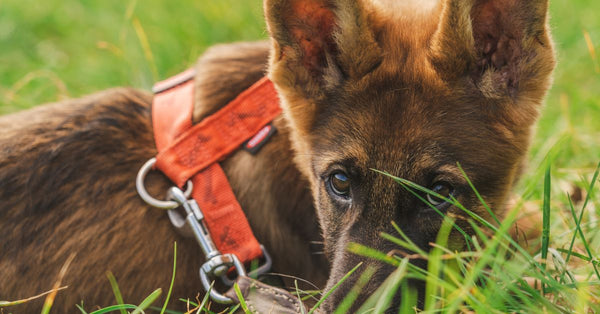
A Rottweiler puppy is a bundle of clumsy enthusiasm, and it is easy to forget how hard their joints are working. They grow fast, they get big, and they carry a lot of weight on frames that are still developing. If you have just brought one home, or you are about to, it makes sense to think about joint comfort early.
The good news is that most of what helps a growing Rottweiler's joints is simple and costs very little. A lean body, sensible exercise, safe floors and good advice from your vet do the heavy lifting. A supplement can have a place in that picture, but it comes after the basics, not before them.
This guide covers what matters most in puppyhood, where a joint supplement fits, and which signs mean it is time to ring your vet. There is a simple plan at the end that you can work through at your own pace.
How the main joint supplements compare for a growing Rottweiler
A Rottweiler puppy will be carrying a lot of dog on a frame that is still growing, so it helps to know what is actually in a joint supplement before you choose one. Ingredient lists vary more than the packaging suggests.
The table below compares MedPaw Hip & Joint Chews Max, our own product, with five other popular UK options. It starts with a simple score: how many of the six key joint actives each one lists.
MedPaw is the only one of the six with all six key joint actives
| Ingredient | MedPaw Hip & Joint Chews Max | NutraPaw Joint Support | YuMOVE Joint Support PLUS Max | Seraquin Joint | Synoquin EFA | Nutraquin+ |
|---|---|---|---|---|---|---|
| Key joint actives | 6 of 6 | 4 of 6 | 3 of 6 (+1 via mussel) | 2 of 6 | 2 of 6 | 3 of 6 |
| Glucosamine | ✓ | ✓ | ✓ | ✓ | ✓ | ✓ |
| Chondroitin | ✓ | ✗ | Via mussel | ✓ | ✓ | ✓ |
| MSM | ✓ | ✓ | ✗ | ✗ | ✗ | ✗ |
| Green-lipped mussel | ✓ | ✓ | ✓ | ✗ | ✗ | ✗ |
| Hyaluronic acid | ✓ | ✓ | ✓ | ✗ | ✗ | ✗ |
| Boswellia | ✓ | ✗ | ✗ | ✗ | ✗ | ✓ |
| Omega-3 | Mussel, flax | Mussel | Mussel, fish oil | ✗ | Krill oil | ✗ |
| Turmeric | ✗ | ✓ | ✗ | ✓ | ✗ | ✗ |
| Collagen | ✗ | ✓ | ✗ | ✗ | ✗ | ✗ |
| Antioxidants | Vit C, Vit E, zinc | Manganese | Vit C, Vit E, manganese | ✗ | Vit C, zinc | Vit C, zinc |
| Format | Soft chew | Tablet | Tablet | Chewable tablet | Tablet or capsule | Capsule |
| Guarantee | 60 days | 90 days | 6 weeks | Not stated | Not stated | Not stated |
✓ = included, ✗ = not listed. Key joint actives: glucosamine, chondroitin, MSM, green-lipped mussel, hyaluronic acid and Boswellia. Taken from each manufacturer's published information, September 2026.
The first row tells the story. MedPaw is the only one of the six with all six key joint actives: glucosamine, chondroitin, MSM, green-lipped mussel, hyaluronic acid and Boswellia serrata. NutraPaw lists four of the six and YuMOVE three, with chondroitin only via mussel. Nutraquin+ lists three, while Seraquin and Synoquin EFA list two each.
For a breed as large and heavy as the Rottweiler, that breadth matters. Joints carry a lot of load over a big dog's lifetime, and one soft chew that brings six actives together, plus omega-3 from green-lipped mussel and flax seed, gives you a broad approach to supporting joints, mobility and comfort, alongside veterinary care.
The daily amount is set by weight, so it grows with your dog. It is 2 chews for 5-17kg and 2-3 for 18kg and over, doubled for the first three weeks. Every tub comes with a 60-day money-back guarantee, and Subscribe & Save is available.
MedPaw contains green-lipped mussel, which is a shellfish, along with rapeseed oil and flax seed. If your dog has a shellfish allergy, needs a low-fat diet, is pregnant or nursing, or is still a growing puppy, check with your vet before starting any joint supplement.
Explore MedPaw Hip & Joint Chews Max See the full ingredient list and feeding guide for the soft chew that brings all six key joint actives together.
Why Rottweiler puppies deserve extra joint thought
Rottweilers are a large, heavy, fast-growing breed. Adults are big, strong dogs, so their hips, elbows and other joints carry a good deal of load over a lifetime. A puppy goes from tiny newborn to very large dog in around a year, and during that time the bones can grow faster than the muscles, ligaments and tendons that support them.
Hip and elbow problems are a well-known concern in the breed. Because breed figures change over time, we would rather point you to the BVA hip and elbow scheme pages for the latest numbers than quote one here.
None of this means your puppy will have problems. It simply explains why joint care is worth thinking about from the start, rather than waiting until a dog is stiff.
Start with the breeder and the health scores
Genetics play a big part here. Hip and elbow conditions can run in families, so the breeder's health testing is the best place to start. You cannot change your puppy's genetics once they are home, but you can choose carefully before they arrive.
If you are still choosing a puppy, ask the breeder for both parents' hip and elbow scores, and ask to see the certificates. Under the BVA/Kennel Club schemes, a lower score is better. It is also fair to ask what the breed average is and how the parents compare with it.
- Ask to see the paperwork, not just hear the numbers.
- Ask how the parents compare with the breed average.
- Be wary of vague answers or breeders who say testing is not needed.
If your puppy is already home, this is still useful to know. Your vet can take the parents' results into account when advising on weight, exercise and monitoring.
Growth, weight and feeding
For a growing Rottweiler, managing growth does more for the joints than any product. Extra weight adds real load to the hips and elbows, and a puppy who grows too quickly or carries too much condition puts those joints under unnecessary strain.
Keep your puppy lean
A good guide is that you can feel the ribs easily under a light covering of flesh, and you can see a waist when you look down from above. Many owners find a puppy at a healthy weight looks thinner than they expect, simply because we are so used to seeing overweight dogs.
Feed a complete large-breed puppy food
Large-breed puppy diets are carefully balanced for steady growth. Feed the amount on the pack and adjust with your vet's advice. Try to resist the urge to overfeed to "build them up". Rottweilers are often very food-motivated, which makes this harder than it sounds.
Remember that treats, training rewards and chews all count towards the daily total. If you add a chew of any kind, think about whether the main meals need trimming slightly. Your vet or a practice nurse can help you work that out.
Weigh regularly
Check your puppy's weight and body shape every few weeks. Many vet practices let you pop in for a free weigh, and it gives you a record to look back on if you ever have a concern.
Exercise that suits growing joints
A common rule of thumb is about 5 minutes of structured exercise for each month of age, up to twice a day. It is only a guide, and your vet may suggest something different for your puppy, but it helps stop good intentions turning into too much.
Rule of thumb for structured walks, up to twice a day
| Puppy's age | Approximate session length | Notes |
|---|---|---|
| 3 months | About 15 minutes | Short, gentle outings on softer ground |
| 4 months | About 20 minutes | Mix lead walking with free sniffing time |
| 6 months | About 30 minutes | Avoid long runs on hard surfaces |
For guidance only, not a diagnosis. Your vet can tailor this to your puppy.
Short, regular outings are better than one long one. Free play at their own pace on grass is kinder to growing joints than forced or repetitive exercise, such as endless ball-chasing. Rough play with other dogs can also lead to overdoing it, so step in when things get too boisterous.
- Avoid repeated jumping from height, including in and out of the car.
- Avoid long runs on hard surfaces while your puppy is still growing.
- Carry your puppy on stairs while they are small enough, as a sensible precaution.
Set up your home to support young joints
A few small changes make daily life easier on a growing dog. Slippery floors are a common culprit, because puppies skid and splay their legs as they race around the kitchen.
- Put non-slip rugs or mats on wooden or tiled floors.
- Use a ramp for the car, or lift your puppy in and out.
- Provide a supportive bed that is easy to get on and off.
- Keep nails trimmed, as long nails can change how a dog stands and moves.
- Raised bowls can be considered, but check with your vet first, especially for a deep-chested breed.
Where a joint supplement fits
A joint supplement is a complementary feed. It sits alongside good feeding, sensible exercise and veterinary care, and it supports joint comfort and mobility as part of that bigger picture. It does not replace any of those things, and it should never delay a vet visit if you are worried about your puppy.
Different brands use different combinations of ingredients, such as glucosamine, chondroitin, green-lipped mussel, hyaluronic acid, MSM, collagen and herbal extracts. When you compare products, look at the ingredient list, the format, the feeding guide and the guarantee, rather than the marketing wording. Be wary of any claim that a product will "fix" or "stop" a condition.
A word on age
Supplements differ in the age and life stage they are intended for, and that depends entirely on the individual product. Always check the label for a minimum age, and ask your vet before starting anything in a growing puppy.
Puppy diets for large breeds are carefully balanced, so any extras should be vet-approved. A puppy health check is a good moment to raise it.
About MedPaw Hip & Joint Chews Max
MedPaw Hip & Joint Chews Max is a daily soft chew and a complementary feed for dogs. Its key joint actives are glucosamine, chondroitin, MSM, green-lipped mussel, hyaluronic acid and Boswellia serrata. It also contains omega-3 from green-lipped mussel and flax seed, vitamins C and E, and zinc, and it is made with rapeseed oil and glycerine.
The feeding guide is 1 chew a day up to 4kg, 2 chews for dogs of 5 to 17kg, and 2 to 3 chews for dogs of 18kg and over. The amount is doubled for the first three weeks, and we recommend daily use for 2 to 3 months. There is a 60-day money-back guarantee, and Subscribe & Save is available.
We have not set out a minimum age for this chew, and we are not presenting it as a puppy product. If you are thinking about it for a growing Rottweiler, please check the pack and talk to your vet first.
How other products differ
Based on manufacturers' published information from September 2026, products vary quite a bit in format and contents. NutraPaw Joint Support is a tablet with glucosamine, MSM, green-lipped mussel, hyaluronic acid, turmeric and collagen, and a 90-day guarantee. YuMOVE Joint Support PLUS Max is a tablet with glucosamine, green-lipped mussel, hyaluronic acid and fish oil, with a 6-week guarantee.
Seraquin Joint is a chewable tablet containing glucosamine, chondroitin and turmeric. Synoquin EFA (tablet or capsule) contains glucosamine, chondroitin and krill oil, and Nutraquin+ is a capsule with glucosamine, chondroitin and Boswellia. None of these is better or worse in every case. The right choice depends on your dog, how easily they take it, and what your vet recommends.
If you do use a supplement
- Be consistent. Daily use matters, so follow the feeding guide and the suggested length of use on the pack.
- Follow the feeding guide on the pack for your dog's weight.
- Count it in the daily food total, as with any chew or treat.
- Tell your vet about every supplement, chew and treat your dog has. They can advise whether a product suits your dog alongside any veterinary medicines.
Signs of joint discomfort to watch for
Puppies are not always good at showing discomfort, and Rottweilers can be stoic. Keep an eye out for any of these:
- Stiffness after rest, or taking a few steps to warm up
- Hesitating at stairs or avoiding them
- Reluctance to jump into the car
- Limping or favouring a leg, especially after exercise or in cold weather
- Tiring quickly or playing less
- Sitting with one leg out to the side rather than tucked under
- Thinner-looking muscles in the back legs
- Behaviour changes, such as grumpiness when touched or preferring to lie down
In a puppy, any of these can be significant, so please do not wait to see whether a supplement helps. Keeping short videos of how your puppy gets up, climbs steps and trots along can help your vet spot changes that are easy to miss day to day.
When to speak to your vet
Only a vet can diagnose a joint problem. They may use a physical examination, X-rays or other tests, and any treatment plan, which might include weight control, exercise changes or pain relief, should come from them. If your puppy is prescribed medicine, give it exactly as directed and keep up with any check-ups your vet asks for.
How quickly should you call the vet?
Questions about weight, food or exercise
Raise these at your next puppy health check, or pop in for a weigh. Ask about supplements at the same time.
On-and-off limping, stiffness or avoiding stairs
Book an appointment promptly. Also mention it if your puppy moves differently from other puppies their age, or is growing unusually fast.
Sudden severe lameness, swelling, yelping or refusing to use a leg
See a vet urgently. The same goes if signs are not improving, or are getting worse, despite rest.
A simple plan for your Rottweiler puppy
If it all feels like a lot, here is a short order of priorities you can work through at your own pace.
- Check the basics first. Look at the breeder's health scores, keep your puppy lean, control exercise, and make floors and car access safe.
- Ask your vet before adding anything. A puppy health check is the ideal time to ask whether a supplement suits your puppy's age, diet and size.
- Weigh and watch. Track weight and body shape every few weeks, and adjust food with your vet's help.
- Plan short, regular outings rather than long ones, and avoid hard-surface running and repetitive jumping.
- Keep notes. A few videos and observations make vet visits more useful.
- Ask about hydrotherapy. Controlled hydrotherapy suits some dogs, but check with your vet first, especially for a young puppy.
Looking after a Rottweiler puppy's joints is mostly about steady, sensible habits repeated over many months. A supplement can be one small part of that routine if your vet agrees, but the foundation is a lean, well-exercised puppy with a safe home and a vet who knows them well.
When should I start a joint supplement for my Rottweiler puppy?
There is no single age that suits every puppy, and the answer depends on the individual product and your puppy. Start with the basics: a lean body, controlled exercise and a good large-breed puppy food. Always ask your vet before adding any supplement to a growing Rottweiler, and check the label of the product for a minimum age.
Is MedPaw Hip & Joint Chews Max suitable for a Rottweiler puppy?
We have not set out a minimum age for this chew, and we do not present it as a puppy product. Please check the pack and ask your vet before giving it to a growing Rottweiler. If your vet agrees, the feeding guide is 2 chews a day for dogs of 5 to 17kg and 2 to 3 chews for dogs of 18kg and over, doubled for the first three weeks.
How many MedPaw chews would a part-grown Rottweiler at 22kg have?
At around 22kg, the printed feeding guide for dogs of 18kg and over is 2 to 3 chews a day, doubled for the first three weeks. The same guide applies to an adult Rottweiler, as the pack is based on weight rather than breed. We recommend daily use for 2 to 3 months, and your vet should confirm whether it suits a growing puppy first.
Do joint supplements replace hip and elbow screening or vet care?
No. A supplement is a complementary feed that sits alongside good breeding, feeding, exercise and veterinary care. Ask the breeder for both parents' BVA/Kennel Club hip and elbow scores and see the certificates. If your puppy is limping, stiff or reluctant to use stairs, speak to your vet rather than waiting to see whether a supplement helps.
How is a chew different from a tablet or capsule for a Rottweiler puppy?
MedPaw Hip & Joint Chews Max is a soft chew, while YuMOVE Joint Support PLUS Max and NutraPaw Joint Support are tablets, Seraquin Joint is a chewable tablet and Nutraquin+ is a capsule. Synoquin EFA comes as a tablet or capsule. The right format depends on what your puppy takes easily, and your vet can advise on what suits them.
What matters more than a supplement for a growing Rottweiler's joints?
Keeping your puppy lean, feeding a complete large-breed puppy food and avoiding too much exercise on hard ground do the most for growing joints. Short, regular outings suit them better than long runs, and non-slip floors help too. Your vet can check your puppy's weight and growth and tailor advice to them.