Watching your dog move with an unusual hopping gait can be concerning, especially when you notice both rear legs moving together like a rabbit rather than the normal alternating pattern. This distinctive movement, known as bunny hopping, isn't just a quirky behaviour. It's usually your dog's way of adapting to discomfort in their hips.
Understanding why dogs develop this gait can help you recognise when your dog needs veterinary attention. The good news is that with proper care and management, most dogs who bunny hop can keep living comfortable, active lives.
This guide covers what causes bunny hopping and how to support your dog's mobility and comfort. The first step is always your vet. Once your dog has been checked, joint support is often part of the plan, so we've also included a comparison of the UK's leading joint supplements, ingredient by ingredient.
Comparing Joint Supplements for Dogs with Hip Problems
Bunny hopping usually means both hips are under strain, so if your vet recommends joint support, it's worth choosing a formula that leaves nothing out. We've compared MedPaw with five of the UK's best-known joint supplements, using each manufacturer's own published ingredients. What each ingredient does is covered further down.
We make MedPaw, so we've been open about how we compared them and credited the other products where they do well.
Full ingredient breakdown: UK dog joint supplements compared
| Ingredient | MedPaw Hip & Joint Chews Max | NutraPaw Joint Support | YuMOVE Joint Support PLUS Max | Seraquin Joint | Synoquin EFA | Nutraquin+ |
|---|---|---|---|---|---|---|
| Glucosamine | ✓ | ✓ | ✓ | ✓ | ✓ | ✓ |
| Chondroitin | ✓ | ✗ | Via mussel | ✓ | ✓ | ✓ |
| MSM | ✓ | ✓ | ✗ | ✗ | ✗ | ✗ |
| Green-lipped mussel | ✓ | ✓ | ✓ | ✗ | ✗ | ✗ |
| Hyaluronic acid | ✓ | ✓ | ✓ | ✗ | ✗ | ✗ |
| Boswellia | ✓ | ✗ | ✗ | ✗ | ✗ | ✓ |
| Omega-3 | Mussel, flax | Mussel | Mussel, fish oil | ✗ | Krill oil | ✗ |
| Turmeric | ✗ | ✓ | ✗ | ✓ | ✗ | ✗ |
| Collagen | ✗ | ✓ | ✗ | ✗ | ✗ | ✗ |
| Antioxidants | Vit C, Vit E, zinc | Manganese | Vit C, Vit E, manganese | ✗ | Vit C, zinc | Vit C, zinc |
| Format | Soft chew | Tablet | Tablet | Chewable tablet | Tablet or capsule | Capsule |
| Guarantee | 60 days | 90 days | 6 weeks | Not stated | Not stated | Not stated |
✓ = included, ✗ = not listed. Taken from each manufacturer's published information, September 2026.
MedPaw is the only supplement of the six with all six key joint actives: glucosamine, chondroitin, MSM, green-lipped mussel, hyaluronic acid and Boswellia serrata. For hips that are already working hard, that means cartilage, joint fluid and the surrounding connective tissue are all supported in one product.
Dogs with sore hips often have enough to deal with without a tablet being pushed into their mouth every day. MedPaw is the only soft chew of the six, so the daily serving is a treat, which makes it much easier to keep going for the months joint support needs.
To be fair to the others: NutraPaw includes turmeric and collagen and offers a longer 90-day guarantee, and Seraquin also contains turmeric. If those ingredients are priorities for you, they're worth weighing up.
See MedPaw Hip & Joint Chews Max, backed by our 60-day money-back guarantee. If your dog has started bunny hopping, please see your vet first to find the cause.
What Is Bunny Hopping in Dogs?
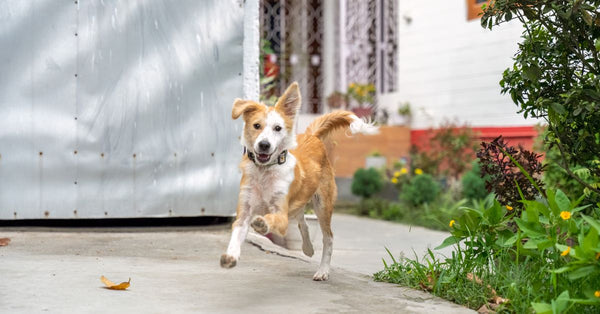
Bunny hopping is an abnormal gait where dogs move both rear legs at the same time, creating a hopping motion similar to a rabbit's. This is very different from normal canine movement, where the rear legs move alternately: one leg forward whilst the other moves back, then switching.
In healthy dogs, each hip moves independently to create this smooth alternating pattern. When a dog bunny hops, the hips move as a single unit instead. This compensatory movement typically develops because normal hip movement has become uncomfortable.
The hopping gait is easiest to spot when watching your dog from behind as they move away from you. You'll notice both rear legs gathering beneath them before pushing off together, rather than the usual fluid stride.
Why Dogs Adopt This Movement Pattern
Dogs are remarkably adaptable and instinctively change how they move to reduce discomfort. When normal hip movement becomes uncomfortable, they discover that moving both legs together eases the strain of each hip working independently.
It's a clever adaptation, but it's also an important signal. The bunny hop isn't just unusual: it's your dog's way of telling you their hips aren't working as they should.
Understanding bunny hopping severity levels
Occasional Hopping
Bunny hopping appears only when tired, after exercise, or during faster movement. Normal gait most of the time.
Regular Hopping
Consistent bunny hopping during normal walking, especially noticeable during daily activities and exercise.
Constant Hopping
Bunny hopping is the main gait pattern, often with reluctance to exercise and difficulty rising.
Primary Causes of Bunny Hopping
The most common cause of bunny hopping is hip dysplasia, a developmental condition affecting how the hip joint forms. It leads to instability and, over time, arthritis, making normal hip movement uncomfortable and prompting the hopping gait.
Hip dysplasia occurs when the ball and socket of the hip don't fit together properly as the dog grows. This poor fit causes abnormal wear and inflammation, eventually resulting in arthritis in dogs and ongoing discomfort.
Other Potential Causes
Whilst hip dysplasia is the leading cause, several other conditions can result in bunny hopping:
- Hip arthritis developing independently of dysplasia
- Injuries affecting both hips
- Muscle weakness or imbalances affecting both hind legs
- Neurological conditions affecting rear limb coordination
- Spinal problems that affect rear leg function
Bunny hopping usually means both sides are affected. If only one hip had a problem, dogs would typically develop a limp rather than the symmetrical hop. Neurological and spinal causes need very different treatment from joint problems, and joint supplements won't help with them, which is one more reason a vet check comes first.
Recognising the Signs
Beyond the obvious hopping motion, several other signs can help you identify this gait problem. The movement is most pronounced during faster activity or play, though some dogs show it during normal walking.
Watch for your dog "gathering" their rear legs beneath them before pushing off, creating that distinctive rabbit-like hop. Some dogs only bunny hop now and then, perhaps when tired or after rest, but even occasional hopping in an adult dog is worth raising with your vet.
Additional Signs to Watch For
Bunny hopping rarely happens on its own. You might also notice:
- Stiffness when rising after rest
- Reluctance to jump or climb stairs
- Less enthusiasm for exercise or play
- Difficulty getting comfortable when lying down
- Muscle loss in the rear legs over time
These accompanying signs help paint a fuller picture of your dog's comfort and give your vet useful information.
Breed Predispositions
Certain breeds are more susceptible to hip dysplasia and related conditions that cause bunny hopping. Large breeds are particularly prone because of their rapid growth and genetic predispositions.
Breed susceptibility to hip problems
Illustrative guide to general breed tendencies. For guidance only, not a diagnosis.
However, any dog can develop hip problems regardless of breed or size. Mixed breeds aren't immune, and smaller dogs can be affected too, though less commonly.
Commonly affected breeds include German Shepherds, Labrador Retrievers, Golden Retrievers, Rottweilers and Great Danes among the large breeds, whilst Border Collies, Australian Shepherds and Bulldogs are medium-sized breeds with higher susceptibility.
When to Seek Veterinary Care
Don't wait if you notice consistent bunny hopping during your dog's normal movement. Early diagnosis gives the most options for managing hip problems, so prompt veterinary consultation is important.
Book a vet appointment promptly if you see the hopping gait alongside other signs like stiffness, reluctance to exercise, or difficulty rising. Some puppies bound with both back legs together when running flat out, but a puppy who hops at a walk or trot, or does it persistently, should be checked by a vet.
What to Expect During Your Veterinary Visit
Your vet will carry out a thorough physical examination, focusing on hip movement and comfort. They'll watch your dog move to assess the gait, and will often recommend X-rays to look at the structure of the hip joints.
The examination checks for arthritis, developmental problems, and other causes such as neurological or spinal issues, so your vet can build a management plan based on what they find.
Management Approaches
Management varies depending on the severity of your dog's condition, their age, and their overall health. Many dogs with mild to moderate hip problems do very well with conservative management.
Conservative Management Options
For mild to moderate cases, non-surgical approaches often work well. Weight management is the cornerstone of care, as excess weight significantly increases the stress on sore hips.
Controlled exercise programmes help maintain muscle whilst avoiding activities that make discomfort worse. Your vet may prescribe anti-inflammatory medication to manage discomfort, whilst physiotherapy and hydrotherapy can improve strength and mobility.
Changes around the home also matter. Non-slip surfaces improve grip, ramps instead of stairs reduce joint strain, and comfortable, supportive bedding helps during rest. Raised food bowls are sometimes suggested, but check with your vet first if you have a large, deep-chested breed, as raised bowls have been linked to a higher risk of bloat in some large and giant dogs.
Surgical Interventions
Severe cases, or those that don't respond to conservative management, may benefit from surgery. Options include total hip replacement, femoral head ostectomy, or other procedures depending on your dog's needs.
Your vet will recommend the most appropriate approach based on your dog's age, activity level, and the severity of their condition.
Supporting Your Dog at Home
Whilst waiting for your vet appointment, there are steps you can take to support your dog's comfort. Cut back on high-impact activities like jumping and rough play, and avoid long walks on hard surfaces where possible.
Continue gentle, controlled exercise as your dog tolerates, as complete rest can lead to muscle weakness and stiffness. Film your dog moving, ideally from behind, as this helps your vet assess the gait even if your dog moves differently at the clinic.
Long-term Lifestyle Modifications
Successful management often means permanent lifestyle adjustments. Focus on low-impact activities like swimming, which gives excellent exercise without stressing the joints. Keep up regular, gentle exercise to preserve muscle, whilst avoiding sudden direction changes and high-impact movements.
Watch how your dog copes and adjust their activity to suit them, but don't rely on them to set their own limits, as many dogs will happily overdo it. Weight management remains critical throughout your dog's life, as a lean body condition makes a real difference to comfort and mobility.
The Role of Nutritional Support
Joint supplements can provide valuable supportive care as part of your vet's management plan. The key ingredients to look for support different parts of the joint:
- Glucosamine and chondroitin support cartilage health and joint cushioning
- Green-lipped mussel provides marine omega-3 and glycosaminoglycans that support joint comfort and a healthy inflammatory response
- Hyaluronic acid is a natural part of joint fluid, helping joints move smoothly
- MSM supplies sulphur for the connective tissue around the joint
- Boswellia serrata is a plant resin traditionally used to support joint comfort
MedPaw Hip & Joint Chews Max contains every ingredient on this list, plus omega-3 from flax and vitamins C and E with zinc. It works best alongside veterinary care, appropriate exercise and weight management, rather than on its own. As green-lipped mussel is a shellfish, it isn't suitable for dogs with a shellfish allergy.
Supplements are complementary feeds that support joint health rather than treating conditions. Always check with your vet before starting a supplement, especially if your dog is on medication.
How Much MedPaw to Give
MedPaw's daily amount depends on your dog's weight: 1 chew for dogs up to 4kg, 2 chews for 5-17kg, and 2-3 chews for 18kg and over. Double the amount for the first 3 weeks to build up levels. We recommend 2-3 months of consistent use for optimal results, and Subscribe & Save makes sure you don't run out. Like most joint supplements, MedPaw is formulated for adult dogs.
Prognosis and Quality of Life
With appropriate management, many dogs with hip problems keep an excellent quality of life. The key factors are early diagnosis, sticking with the management plan, and regular veterinary monitoring.
Even dogs with significant hip dysplasia can stay comfortable and active with proper care. The bunny hop often becomes less pronounced once the underlying discomfort is managed, though some dogs always keep elements of the movement.
Owner commitment makes a big difference. Dogs whose families embrace the necessary changes tend to do better and stay mobile well into their senior years.
Prevention and Early Intervention
Whilst hip dysplasia has genetic components that can't be prevented, environmental factors during growth also play a part. Proper nutrition during puppyhood, avoiding excessive exercise on hard surfaces, and keeping a healthy weight all contribute to healthier hip development.
For breeds at higher risk, regular veterinary check-ups can pick up problems early, when there are the most options. Many breeders now use hip scoring schemes to reduce the chance of producing affected puppies, though this doesn't guarantee healthy hips.
The most important message is that bunny hopping should never be ignored or dismissed as a quirk. It's your dog's attempt to manage discomfort, and early veterinary attention gives the best chance of long-term mobility and comfort. If you notice any signs of discomfort or persistent bunny hopping, speak to your vet. With the right care, most dogs with hip problems can continue to enjoy active, fulfilling lives with their families.
Once your vet has checked your dog, MedPaw Hip & Joint Chews Max gives their hips the most complete support in our comparison: all six key joint actives, in a soft chew they'll look forward to every day. Give it 2-3 months, and if you're not happy, our 60-day money-back guarantee has you covered. Shop MedPaw Hip & Joint Chews Max
Is bunny hopping always a sign of hip dysplasia?
Hip dysplasia is the most common cause of bunny hopping, but it's not the only one. Hip arthritis, injuries to both hips, muscle weakness, and neurological or spinal problems can also cause this gait. Whatever the cause, bunny hopping means your dog needs a veterinary assessment.
Can puppies bunny hop normally during play?
Some puppies bound with both back legs together when running flat out, but hopping at a walk or trot, or doing it persistently, isn't normal. Healthy puppies should move their back legs alternately at normal speeds. If you're unsure, film your puppy moving and show your vet, as early assessment gives the most options.
Will my dog's bunny hopping get worse over time?
It depends on the underlying cause and how it's managed. With appropriate veterinary care, weight management and lifestyle changes, many dogs stay comfortable for years. Without proper management, the underlying condition may worsen, so work with your vet on a care plan that suits your dog.
Can joint supplements help dogs who bunny hop?
Joint supplements can support joint health and comfort as part of your vet's management plan, particularly when the cause is hip dysplasia or arthritis. They work best alongside veterinary care, appropriate exercise and weight management rather than on their own, and they won't help if the cause is neurological. Always check with your vet before starting a supplement.
What is the best joint supplement for a dog that bunny hops?
First, get your vet to confirm the cause. If joint support is recommended, look for a comprehensive formula your dog will take every day. In our comparison of six leading UK joint supplements, MedPaw Hip & Joint Chews Max was the only one with all six key actives: glucosamine, chondroitin, MSM, green-lipped mussel, hyaluronic acid and Boswellia. It's also the only soft chew, and it's backed by a 60-day money-back guarantee.
Should I stop exercising my dog if they bunny hop?
Don't stop exercise completely, as this can lead to muscle weakness and stiffness. Instead, focus on low-impact exercise like controlled walks and swimming, and avoid high-impact activities like jumping or rough play. Your vet can give specific exercise advice based on your dog's condition.