If you work a Springer, you already know how much they give. Long days on the peg or in the beating line, retrieves through water and cover, and a tail that never stops going. That same drive is what makes their joints worth looking after, because a Springer will keep working long after a sensible dog would have sat down.
In this guide we cover what to look for in a joint supplement for a working Springer, how the main ingredients are used, and how the well-known UK options differ. We also look at the everyday habits that matter just as much as anything in a tub. A supplement supports joint comfort and mobility alongside good management and veterinary care. It is not a replacement for either.
One thing before we start. If your dog is limping, in obvious pain or getting worse, the first step is a vet appointment, not a supplement.
Choosing a joint chew for a dog that works all season
A working Springer carries around 18 to 25kg through water, cover and long days in the field, so the choice of daily joint supplement deserves a proper look. The table below compares MedPaw, our own product, with five well-known UK options.
Rather than relying on marketing, it counts how many of six key joint actives each formula lists: glucosamine, chondroitin, MSM, green-lipped mussel, hyaluronic acid and Boswellia serrata.
UK dog joint supplements compared, ingredient by ingredient
| Ingredient | MedPaw Hip & Joint Chews Max | NutraPaw Joint Support | YuMOVE Joint Support PLUS Max | Seraquin Joint | Synoquin EFA | Nutraquin+ |
|---|---|---|---|---|---|---|
| Key joint actives | 6 of 6 | 4 of 6 | 3 of 6 (+1 via mussel) | 2 of 6 | 2 of 6 | 3 of 6 |
| Glucosamine | ✓ | ✓ | ✓ | ✓ | ✓ | ✓ |
| Chondroitin | ✓ | ✗ | Via mussel | ✓ | ✓ | ✓ |
| MSM | ✓ | ✓ | ✗ | ✗ | ✗ | ✗ |
| Green-lipped mussel | ✓ | ✓ | ✓ | ✗ | ✗ | ✗ |
| Hyaluronic acid | ✓ | ✓ | ✓ | ✗ | ✗ | ✗ |
| Boswellia | ✓ | ✗ | ✗ | ✗ | ✗ | ✓ |
| Omega-3 | Mussel, flax | Mussel | Mussel, fish oil | ✗ | Krill oil | ✗ |
| Turmeric | ✗ | ✓ | ✗ | ✓ | ✗ | ✗ |
| Collagen | ✗ | ✓ | ✗ | ✗ | ✗ | ✗ |
| Antioxidants | Vit C, Vit E, zinc | Manganese | Vit C, Vit E, manganese | ✗ | Vit C, zinc | Vit C, zinc |
| Format | Soft chew | Tablet | Tablet | Chewable tablet | Tablet or capsule | Capsule |
| Guarantee | 60 days | 90 days | 6 weeks | Not stated | Not stated | Not stated |
✓ = included, ✗ = not listed. Key joint actives: glucosamine, chondroitin, MSM, green-lipped mussel, hyaluronic acid and Boswellia. Taken from each manufacturer's published information, September 2026.
The top row is the one to read first. MedPaw is the only product of the six listing all six key joint actives, scoring 6 of 6. NutraPaw lists 4, YuMOVE and Nutraquin+ list 3, and Seraquin and Synoquin EFA list 2. For a dog that works hard, a broader range of actives in one daily serving is a sensible thing to look for.
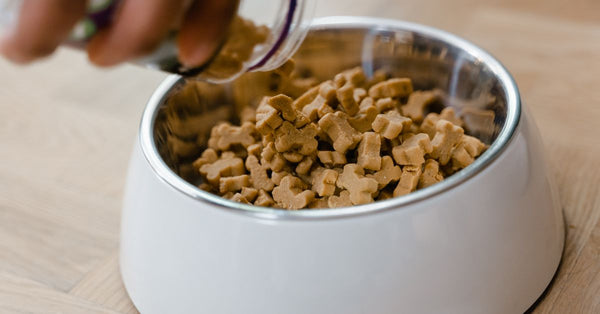
Format matters on a working day too. MedPaw is a soft chew, which most Springers take happily from a gundog bowl or as a treat after a day's work. At 18kg and over the label gives 2 to 3 chews a day, doubled for the first three weeks, with 2 to 3 months of daily use recommended for optimal results.
MedPaw supports joint comfort and mobility alongside good management and veterinary care. It comes with a 60-day money-back guarantee, and Subscribe & Save is available if you want it to arrive without having to remember.
See MedPaw Hip & Joint Chews Max If you would like a daily soft chew for your working Springer's joints, you can read the full details on the product page.
Why working Springers are a special case
Springers are hip and elbow scored under the BVA/Kennel Club schemes, which tells you joints matter in this breed. A typical adult Springer weighs somewhere around 18 to 25kg, which is plenty of bodyweight for the joints to carry, and the breed was built for stamina rather than short bursts.
Working Springers are so active that even a minor joint problem can show up earlier than it would in a less active breed. They are also stoic and often hide discomfort, so subtle changes are easy to miss.
Good hip scores are reassuring, but they are not a lifetime guarantee. A dog with excellent scores can still develop stiffness and arthritis later in life through the cumulative wear of running, jumping, swimming and retrieving. Scores tell you about structure at one point in time. They cannot tell you how many seasons of hard work the joints have been through.
Common joint concerns in the breed
Different concerns tend to appear at different life stages. This is a general guide to what vets commonly see in Springers, and your own vet is the right person to interpret what is happening with your dog.
Joint concerns seen in Springers, and when they tend to appear
| Concern | Typical timing | Notes |
|---|---|---|
| Osteochondritis dissecans (OCD) | In young, growing dogs | Linked to rapid growth. The shoulder is most often affected in young Springers. |
| Hip and elbow dysplasia | Often apparent in young adulthood | Signs may come earlier in working dogs. Fragmented coronoid process is the elbow form most often seen. |
| Cruciate ligament injury | Any adult age | Years of sharp turns and jumping add up. Joint changes can follow in the affected knee, so ongoing joint care matters. |
| Age-related arthritis | Often from middle age | Can occur even with good hip scores. |
For guidance only, not a diagnosis.
Dogs that retrieve and carry for a living can also show elbow trouble in a very particular way: a growing reluctance to retrieve. It is easy to put that down to attitude, but it is worth treating as a possible sign of discomfort and mentioning to your vet.
Early signs to watch for
Because Springers hide discomfort so well, look for patterns rather than one-off moments. One slow morning after a hard day is normal. The same thing week after week is worth noting down.
- Less enthusiasm for retrieving, or tiring sooner than usual.
- Pausing before jumping into the car or onto furniture.
- Stiffness after exercise or first thing in the morning that keeps coming back.
- Taking longer to warm up after resting.
- Slower on stairs, or taking them one at a time.
- A bunny-hopping gait, with both back legs moving together when running.
- A shorter stride, or shorter play sessions.
- Grumpiness when touched in certain places, less tolerance of other dogs, or avoiding favourite activities.
If several of these sound familiar, please book a vet check. Try not to simply add a supplement and wait. Your vet can find out what is going on and tell you what is sensible for your dog's work.
What the main joint ingredients do
Joint supplement labels can read like a chemistry exam. Here is what each of the common ingredients is generally used for, in plain terms.
The cartilage and lubrication group
- Glucosamine helps maintain cartilage and supports joint comfort. It tends to be used alongside other nutrients rather than on its own.
- Chondroitin sulphate works with glucosamine to support cartilage structure, including its elasticity and shock-absorbing properties.
- Hyaluronic acid helps maintain joint lubrication for smoother movement, and again is usually part of a complete formula.
The natural extras
- Green-lipped mussel is a natural source of glycosaminoglycans and omega-3 fatty acids, and is used to support joint comfort and mobility.
- MSM and Boswellia serrata are additional joint-support ingredients that broaden a formula.
- Vitamin C plays a role in collagen formation. Some formulas also include vitamin E, zinc or manganese.
- Collagen appears in some products as a joint-support ingredient. It is sensible to keep your expectations general and to look at the formula as a whole.
A note on omega-3
Omega-3 is a fatty acid that supports a healthy inflammatory response and general joint comfort. Many joint supplements contain some omega-3, for example from green-lipped mussel or flax seed.
If your vet recommends a specific, higher daily EPA and DHA amount, that usually comes from a dedicated fish oil given alongside the joint supplement. Your vet should set that dose, not the label on a tub.
How the main UK supplements compare
There are several good-quality options, and each has genuine strengths. What follows comes from each manufacturer's published information as of September 2026. Please check the current label yourself before you buy.
- MedPaw Hip & Joint Chews Max is a daily soft chew and complementary feed. It contains glucosamine, chondroitin, MSM, green-lipped mussel, hyaluronic acid and Boswellia serrata, plus omega-3 from green-lipped mussel and flax seed, vitamins C and E, and zinc. It is made with rapeseed oil and glycerine, and comes with a 60-day money-back guarantee. Among the six products in this comparison, it is the only one listing all six of those key joint actives.
- NutraPaw Joint Support is a tablet with glucosamine, MSM, green-lipped mussel, hyaluronic acid, turmeric and collagen, with omega-3 from the mussel plus manganese. It does not list chondroitin or Boswellia. Its 90-day guarantee is longer than MedPaw's.
- YuMOVE Joint Support PLUS Max is a tablet with glucosamine, green-lipped mussel, hyaluronic acid and fish oil, plus vitamins C and E and manganese. Chondroitin is present only via the mussel. It does not list MSM, Boswellia, turmeric or collagen, and it has a 6-week guarantee.
- Seraquin Joint is a chewable tablet with glucosamine, chondroitin and turmeric. It does not list MSM, green-lipped mussel, hyaluronic acid, Boswellia, omega-3 or collagen. Its guarantee is not stated.
- Synoquin EFA comes as a tablet or capsule with glucosamine, chondroitin and krill oil, plus vitamin C and zinc. It does not list MSM, green-lipped mussel, hyaluronic acid, Boswellia, turmeric or collagen. Its guarantee is not stated.
- Nutraquin+ is a capsule with glucosamine, chondroitin and Boswellia, plus vitamin C and zinc. It does not list MSM, green-lipped mussel, hyaluronic acid, omega-3, turmeric or collagen. Its guarantee is not stated.
Some ingredients appear in other products but not in MedPaw. Turmeric is in NutraPaw and Seraquin, collagen is in NutraPaw, and krill oil is in Synoquin EFA. If one of those matters most to you, weigh it up honestly against the rest of the formula.
What to look for in any supplement
- A broad range of joint actives, rather than one or two.
- Feeding amounts that properly cover your dog's weight.
- A format your dog will happily take every day.
- A guarantee that gives you time to judge the result.
- A sensible cost per day at the right amount for your dog's weight, not just the tub price.
That last point catches a lot of people out. A product that looks good value for a small dog can cost far more per day for a 22kg working Springer, so always work out the daily amount first.
Feeding guide for MedPaw Hip & Joint Chews Max
This applies to MedPaw only. The daily amount depends on bodyweight.
- Up to 4kg: 1 chew a day.
- 5 to 17kg: 2 chews a day.
- 18kg and over: 2 to 3 chews a day.
- Double the amount for the first three weeks.
- Use daily for 2 to 3 months.
Most adult Springers at 18 to 25kg sit in the 18kg-and-over band. A smaller Springer under 18kg falls into the 5 to 17kg band. Because it is a soft chew, it can double as a reward from the training pouch, which makes a daily habit easier to keep.
A supplement is best given consistently as part of the daily routine, so many owners start it well ahead of the shooting season rather than in the middle of it. Subscribe & Save is available if you would rather not run out mid-season.
When to start, and how long to give it
For working dogs, many owners consider starting joint support once their dog is fully grown, ideally after checking with the vet. For puppies, please speak to your vet before adding any joint supplement. A balanced puppy diet and sensible exercise come first.
Give a supplement a fair trial of consistent daily use. If you see no change after that, speak to your vet rather than simply increasing the amount or switching products.
Everyday habits that matter as much as the supplement
A tub of chews will not make up for a dog that is overweight or overworked. These habits do a lot of the heavy lifting.
Weight
Keep your Springer lean. You should be able to feel the ribs easily without pressing hard. Even a little extra weight can affect comfort, especially in a dog already showing stiffness. With puppies, ask your vet what a healthy growth rate looks like and keep them slightly lean rather than round.
Training load
- Keep the number of retrieves in a session sensible, and stop before your dog is tired, even if they beg for more.
- Several short sessions are kinder than one marathon.
- Build fitness gradually before the season rather than jumping from minimal activity to full days.
- Give regular rest days with light walks only.
Warm-up, cool-down and surfaces
Spend a few minutes walking gently before intense work, and the same again afterwards. Grass, sand and soil are kinder surfaces, and stubble after harvest is acceptable. Avoid concrete, tarmac and rocky ground for extended sessions.
Cold water
Very cold water may make stiffness more noticeable, especially in a dog who is already a little creaky. Warm up well beforehand, towel your dog down thoroughly and give them a warm, dry rest afterwards. Ask your vet whether heated hydrotherapy might suit your dog.
Competition dogs
If you compete, practise jumps below full height most of the time and save full height for the event itself. Allow rest and light walks afterwards, then build back up gradually.
Looking after a Springer puppy
The groundwork for lifelong joint comfort starts early. A common rule of thumb is about 5 minutes of exercise per month of age, twice daily. That means two 20-minute sessions for a 4-month-old and two 30-minute sessions for a 6-month-old.
- Avoid forced running or jumping until your puppy is fully grown. Your vet can advise on when that is.
- Keep early retrieving short and low, with no jumping, focusing on steadiness.
- Swimming is low impact and builds fitness once your puppy is confident in water.
If you are buying a puppy
Ask for both hip and elbow scores for both parents, and ask to see the certificates. Ask about the parents' working history and whether any retired early because of joint problems. Be wary of any breeder who will not share health clearances.
When to see a vet
Working Springers are tough, which is exactly why owners can be slow to spot a problem. Use this as a quick guide to how urgent a sign might be.
How quickly to involve your vet
Regular check-ups
Working dogs benefit from an annual check that covers working load and a joint assessment. More frequent checks may suit dogs in regular work.
Persistent changes
Ongoing stiffness, longer warm-up times, falling enthusiasm for work or play, performance that keeps declining despite good management, or no noticeable change after a fair trial of consistent supplement use.
Prompt attention
Sudden lameness, a dog that cannot bear weight on a limb, visible swelling around a joint, or any signs of acute pain.
Ask your vet before changing the routine of a dog recovering from cruciate surgery or with a diagnosed condition. X-rays and scoring are also for your vet to advise on. And if you have a puppy and are thinking about a supplement, have that conversation first.
The bottom line for working Springer owners
The best joint supplement for a working Springer is one with a broad range of joint actives, a feeding amount that properly covers an 18 to 25kg dog, a format your dog takes happily every day, and a guarantee that gives you time to judge it fairly. Read the labels yourself, compare the daily cost at your dog's weight, and match the ingredients to what matters to you.
Then back it up with the basics: a lean dog, sensible training loads, good surfaces, a proper warm-up and regular vet checks. A supplement is one supportive part of your Springer's daily routine, and those habits sit alongside it to help keep your dog comfortable and moving well.
What is the best joint supplement for a working Springer Spaniel?
There is no single answer for every dog, but it helps to look for a broad range of joint actives, a daily amount that properly covers an 18 to 25kg dog, a format your Springer will happily take, and a guarantee that gives you time to judge it fairly. MedPaw Hip & Joint Chews Max is a soft chew that lists glucosamine, chondroitin, MSM, green-lipped mussel, hyaluronic acid and Boswellia serrata in one product. Some rivals have strengths too, such as NutraPaw's longer 90-day guarantee, so read each label before you choose.
How many MedPaw chews should a 20kg Springer have each day?
At 20kg your dog falls in the 18kg and over band, which is 2 to 3 chews a day. The amount is doubled for the first three weeks, and the label suggests daily use for 2 to 3 months. A tub holds 60 chews, so check the label and your dog's weight when working out how long one tub will last.
Can I give my Springer a joint supplement as a puppy?
Please speak to your vet before giving any joint supplement to a growing puppy. A balanced puppy diet, a lean body condition and sensible, limited exercise come first. Many owners of working dogs consider joint support once the dog is fully grown, ideally after checking with their vet.
My Springer seems stiff after a day's work. Should I just start a supplement?
A single slow morning after a hard day is common, but stiffness that keeps coming back, a reluctance to retrieve or pausing before jumps is worth a vet visit first. Your vet can find out what is going on and advise what is sensible for your dog's work. A supplement is a complementary feed that supports joint comfort and mobility alongside good management and veterinary care, not a replacement for either.
How long should I give a joint supplement before judging whether it suits my dog?
Consistency matters more than quick results, so give it a fair trial of regular daily use. For MedPaw, the label suggests 2 to 3 months, and there is a 60-day money-back guarantee. If you see no change after a fair trial, speak to your vet rather than simply increasing the amount or switching products.
Are chews better than tablets or capsules for a working dog?
It depends on your dog. A soft chew can double as a reward from the training pouch, which many owners find makes a daily routine easier to keep. Tablets and capsules suit some dogs well, so choose the format your Springer will take reliably and compare the daily amount and cost at their weight, not just the tub price.