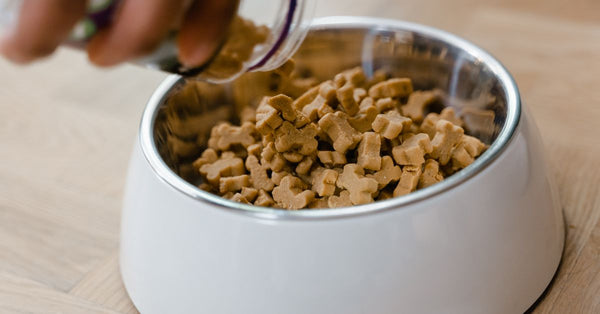
If you have typed "Zesty Paws dosage" into a search bar, you are probably standing in the kitchen with a tub in one hand and a slightly stiff dog at your feet, wondering how many chews is right. It is a sensible question, and the honest answer is shorter than you might expect: the dose is the one printed on the label of the exact product you bought.
We are a different brand, so we cannot give you a Zesty Paws joint dose, and we will not guess at one. What we can do is share what Zesty Paws has said about its chews in general, show you how to read any supplement label with confidence, and explain why sticking to the labelled amount matters.
Where a detail is not covered by the information we have, we say so plainly and point you back to your tub and your vet.
Dose is one question, what is in the chew is another
Once you know the daily amount on your Zesty Paws label, the next question is what that amount actually gives your dog. The table below sets MedPaw Hip & Joint Chews Max, our own product, against five UK joint supplements, opening with a score for key joint actives.
Zesty Paws is not one of the columns, so use the table as a checklist. Read the active ingredients on your tub, then see how many of the six key joint actives it names.
Key joint actives in the UK's leading dog joint supplements
| Ingredient | MedPaw Hip & Joint Chews Max | NutraPaw Joint Support | YuMOVE Joint Support PLUS Max | Seraquin Joint | Synoquin EFA | Nutraquin+ |
|---|---|---|---|---|---|---|
| Key joint actives | 6 of 6 | 4 of 6 | 3 of 6 (+1 via mussel) | 2 of 6 | 2 of 6 | 3 of 6 |
| Glucosamine | ✓ | ✓ | ✓ | ✓ | ✓ | ✓ |
| Chondroitin | ✓ | ✗ | Via mussel | ✓ | ✓ | ✓ |
| MSM | ✓ | ✓ | ✗ | ✗ | ✗ | ✗ |
| Green-lipped mussel | ✓ | ✓ | ✓ | ✗ | ✗ | ✗ |
| Hyaluronic acid | ✓ | ✓ | ✓ | ✗ | ✗ | ✗ |
| Boswellia | ✓ | ✗ | ✗ | ✗ | ✗ | ✓ |
| Omega-3 | Mussel, flax | Mussel | Mussel, fish oil | ✗ | Krill oil | ✗ |
| Turmeric | ✗ | ✓ | ✗ | ✓ | ✗ | ✗ |
| Collagen | ✗ | ✓ | ✗ | ✗ | ✗ | ✗ |
| Antioxidants | Vit C, Vit E, zinc | Manganese | Vit C, Vit E, manganese | ✗ | Vit C, zinc | Vit C, zinc |
| Format | Soft chew | Tablet | Tablet | Chewable tablet | Tablet or capsule | Capsule |
| Guarantee | 60 days | 90 days | 6 weeks | Not stated | Not stated | Not stated |
✓ = included, ✗ = not listed. Key joint actives: glucosamine, chondroitin, MSM, green-lipped mussel, hyaluronic acid and Boswellia. Taken from each manufacturer's published information, September 2026.
The top row is the one to look at first. MedPaw is the only product of the six with all six key joint actives: glucosamine, chondroitin, MSM, green-lipped mussel, hyaluronic acid and Boswellia serrata. The others name between two and four. For a dog whose joints are starting to slow them down, that range in one daily chew is a sensible way to support mobility and comfort, alongside your vet's advice.
If your dog weighs 20kg, the MedPaw label says 2-3 chews a day, doubled for the first three weeks. We suggest 2-3 months of daily use for optimal results. It is a soft chew, so most dogs take it happily from the hand or in a bowl.
There is also a 60-day money-back guarantee, and Subscribe & Save if you would like the routine to run without reordering.
Explore MedPaw Hip & Joint Chews Max If you would like all six key joint actives in one soft daily chew, take a closer look at the MedPaw formula.
What the dose actually depends on
There is no single Zesty Paws number that fits every product. The brand's own guidance is to stick to the daily dose suggested on the label. That advice was given in answer to what happens if a dog eats too many chews, but it applies just as well to everyday feeding.
Another product page from the same brand, for a calming chew, says to introduce a supplement gradually and to follow feeding guidelines based on your dog's weight. That suggests Zesty Paws labels are weight-based. We have not seen a feeding guide for a joint product, though, so please do not assume the same bands apply to yours. Your tub is the authority.
That is also why you will see different answers online. A figure that suits one product, one weight band or one brand may be quite wrong for another.
What Zesty Paws says about its chews in general
The information available covers the brand's chews as a whole, rather than one joint formula. We are passing it on as general statements, not as a description of any particular joint product.
Timing is flexible
The chews are described as flexible to give. They can be fed every morning, each afternoon, or split across the day. If you like routine, a fixed slot with breakfast is an easy habit to keep, and many dogs settle into it happily.
Consistency is the point
The brand stresses that making the chew part of a daily routine is the best way to get the most from it. That fits how joint supplements are usually framed: a daily habit, not an occasional extra.
Minimum age
Zesty Paws chews are stated as suitable for dogs from 4 months old. Joint support is usually talked about for adult and senior dogs, so if your dog is young, or is a puppy under veterinary care, ask your vet before adding anything new.
Medication and other supplements
The brand says its chews can be given alongside medication and other supplements if needed, but to check with your vet first. This matters for dogs with stiff joints, because many are already on medicines prescribed by their vet. Please do not combine anything without their say-so.
What the chews are said to contain
The general statements describe the chews as containing a preservative, potassium sorbate, and as including ingredients such as turkey, salmon and dried pumpkin, with a noticeable smell because of the meat. They are described as designed to complement the daily diet.
These are brand-wide statements. We cannot tell you whether a particular joint product uses all of them, and we have no joint active ingredients to report. Check the current label for the full composition, active ingredients, analytical constituents and additives.
How to read a supplement label properly
Whichever brand you choose, the label holds the information you need. It is worth spending five minutes with it before the first chew, rather than relying on memory later.
A quick checklist for reading any joint supplement label
| Look for | Why it matters | Where to check |
|---|---|---|
| Exact product name | Ranges contain several products, and each has its own dose | Front of the tub |
| Weight bands | Shows how many chews suit your dog's weight | Feeding guide |
| Daily amount and any starter period | Some products ask for a higher amount at the start | Feeding guide |
| Recommended trial length | Each product sets its own timescale | Feeding guide or directions |
| Active ingredients and additives | Helps you avoid doubling up and spot anything your dog reacts to | Composition panel |
| Minimum age | Confirms the product suits your dog's life stage | Label or directions |
| Storage | Keeps the chews in good condition | Back of the tub |
For guidance only, not a diagnosis.
Formulas and feeding guides can change over time, so check against the packaging you actually hold, not an old tub or a web page.
Weigh your dog before you start
A weight-based feeding guide only works if you know your dog's weight. Guessing is easy to get wrong, especially with a fluffy coat that hides a lot.
For a small dog, weigh yourself on the bathroom scales, then weigh yourself holding your dog, and subtract the first figure from the second. For a bigger dog, ask your vet practice, as many are happy to help. It is also a good chance to ask about body condition.
Keeping a healthy weight is one of the kindest things you can do for stiff or sore joints, with or without a supplement.
Starting out sensibly
Whatever the product, a calm, gradual start usually goes best. The brand's own guidance is to introduce a supplement gradually, and that is sound advice for any new addition to the bowl.
- Start as the label says. Follow the starting instructions exactly, and watch for any change in appetite or stools during the first week.
- Pick a routine. Same time every day, with a meal if your dog does better with food in the stomach. Splitting the dose across the day is allowed.
- Handle fussy eaters gently. The calming product page suggests crumbling a chew over regular food or wrapping it in something your dog likes. Check the label to make sure this suits your product.
- Avoid doubling up. If your dog already has a joint supplement or a joint-support diet, a second product may repeat the same ingredients. Ask your vet before combining.
Why more is not better
It can be tempting to add an extra chew on a stiff morning. Try to resist. The brand asks owners to stick to the labelled amount, and there is no sound reason to go beyond it.
If your dog raids the tub and eats a large number of chews, ring your vet, or an out-of-hours vet, for advice, and keep the packaging to hand so they can see exactly what was eaten. If your dog has vomiting, diarrhoea, itching or lethargy after starting a new chew, stop the product and call your vet.
Giving it time, and keeping notes
Supplements are part of a daily routine, so progress tends to be gradual. Timescales are also specific to each product. A calming product from the same brand sets out its own trial period, and that should not be borrowed for a joint chew. Look for the recommended trial length on your joint product's label, and remember that every dog is different.
A simple diary makes it easier to see what is happening. Jot down a few things each week:
- How your dog manages the stairs or getting into the car.
- How easily they get up after a rest.
- The length of walks they are happy with.
- Their interest in play.
Short videos of your dog walking or rising can help your vet spot changes that are hard to describe in words.
Is a joint routine relevant to your dog's age?
Dogs are generally thought of as senior from around seven, a little earlier for larger breeds and a little later for smaller ones. Puppies typically move into adulthood at around one year, sometimes later in bigger breeds.
A joint-focused routine is most often talked about for adult and senior dogs, but age is only part of the picture. A dog of any age who is moving differently deserves a proper chat with the vet.
Storage and tidying up
Storage is simple. Keep the tub in a cool, dry place such as a cupboard. No refrigeration is needed, and the lid should be clicked back down after each use so the chews stay fresh and out of reach of a curious nose.
The tubs and labels are described as recyclable, though the lids may need to be disposed of differently, so check your local council's advice.
When to see your vet
A supplement should never delay a proper diagnosis. Joint support sits alongside veterinary care, not in place of it. Book an appointment before or alongside starting any joint product if you notice any of the following.
How quickly to call the vet
Mild changes to talk through
Slower on walks, less keen to play, or a little stiff after rest. Mention it at your next check-up, and tell the vet about every supplement, treat and medicine your dog has.
Book an appointment soon
Difficulty rising, reluctance to jump or use stairs, licking at one joint, muscle loss, "bunny hopping", weight or appetite changes, or becoming withdrawn or restless at night.
Contact the vet promptly
Sudden or severe limping, a held-up leg, yelping when touched, swollen or hot joints, a dog that has eaten far more than the labelled dose, or sickness and diarrhoea after a new chew. Sudden inability to stand, severe pain or collapse needs urgent attention.
Ask your vet to approve any new supplement first if your puppy is under 4 months, your dog is on prescribed medication, or your dog has an existing health condition.
Keep the rest of the picture in view
A joint supplement is a complementary feed, so it works best as one part of a wider routine. A healthy weight, sensible exercise, non-slip flooring and a supportive bed all matter. Rugs on slippery floors and a ramp for the car can make everyday life more comfortable, whichever chew you choose.
How MedPaw's feeding guide differs
This article is about Zesty Paws, and MedPaw is a separate product with its own feeding guide. We set it out here only so the two are not confused. None of the details below describe Zesty Paws.
MedPaw Hip & Joint Chews Max is a daily soft chew, a complementary feed for dogs. Its feeding guide is:
- 1 chew a day up to 4kg.
- 2 chews for 5-17kg.
- 2-3 chews for 18kg and over.
- Doubled for the first three weeks.
- 2-3 months of daily use recommended.
Its key joint actives are glucosamine, chondroitin, MSM, green-lipped mussel, hyaluronic acid and Boswellia serrata, and it comes with a 60-day money-back guarantee.
Joint products also come in different formats, and their ingredients and timescales differ. That is the main reason not to carry one brand's dose over to another. Whatever you choose, follow the label on that tub, check it with your vet, and give your dog the time and routine to settle in.
How many Zesty Paws chews should I give my dog a day?
The amount depends on the exact Zesty Paws product you bought and your dog's weight, so the feeding guide on your own tub is the one to follow. The brand's general advice is to stick to the daily dose suggested on the label. If you cannot find a joint feeding guide for your product, check the current label or ask your vet before guessing.
Can I give my dog an extra Zesty Paws chew on a stiff day?
It is best not to. The brand asks owners to stick to the labelled daily amount, and there is no sound reason to go above it. If your dog seems stiffer than usual, that is a good moment to speak to your vet rather than adjust the dose yourself.
What should I do if my dog eats a lot of chews from the tub?
Ring your vet, or an out-of-hours vet, for advice as soon as you notice, and keep the packaging to hand so they can see exactly what was eaten. If your dog has vomiting, diarrhoea, itching or lethargy after starting a new chew, stop the product and call your vet.
Can Zesty Paws chews be given with my dog's medication?
The brand says its chews can be given alongside medication and other supplements if needed, but to check with your vet first. This matters for dogs with stiff joints, as many are already on medicines prescribed by their vet. Please do not combine anything without their agreement.
How old does my dog need to be for Zesty Paws chews?
Zesty Paws states its chews are suitable for dogs from 4 months old. Joint support is usually talked about for adult and senior dogs, so if your dog is young or under veterinary care, ask your vet before adding anything new.
How does the MedPaw chew dose compare at 20kg?
MedPaw Hip & Joint Chews Max is a separate product with its own label. For a dog of 18kg and over the label says 2-3 chews a day, doubled for the first three weeks, with 2-3 months of daily use recommended. Please check your own tub and speak to your vet before starting any supplement, particularly if your dog is on medication.