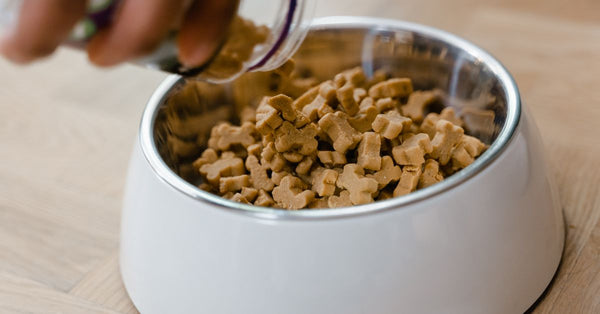
If you have picked up a pouch of Joint Aid for Dogs and are staring at the scoop wondering how much to give, you are not alone. Pellet supplements are measured differently from tablets and chews. The amount depends on your dog's size and on which feeding level you choose.
This guide pulls together what published sources say about Joint Aid dosage, in plain English. Joint Aid is not a MedPaw product, so we have kept to what the sources state and pointed out where you should check the current label. A supplement supports joints and mobility alongside veterinary care. It does not replace a diagnosis.
One thing before we start. Several figures in the sources disagree with each other, and the weight chart was not legible in what we could review. So this article shows you the method and some sensible habits, and leaves the exact weight bands to the pouch in your hand.
Checking Joint Aid's scoop against six key joint actives
Working out how much Joint Aid for Dogs to give is only half the question. The other half is what each serving actually contains. Before you settle on a scoop size, it helps to see how the key joint actives compare across popular UK options.
The table below sets MedPaw Hip & Joint Chews Max, our own product, beside five well-known joint supplements. It opens with a score for six key joint actives.
Key joint actives in the UK's leading dog joint supplements
| Ingredient | MedPaw Hip & Joint Chews Max | NutraPaw Joint Support | YuMOVE Joint Support PLUS Max | Seraquin Joint | Synoquin EFA | Nutraquin+ |
|---|---|---|---|---|---|---|
| Key joint actives | 6 of 6 | 4 of 6 | 3 of 6 (+1 via mussel) | 2 of 6 | 2 of 6 | 3 of 6 |
| Glucosamine | ✓ | ✓ | ✓ | ✓ | ✓ | ✓ |
| Chondroitin | ✓ | ✗ | Via mussel | ✓ | ✓ | ✓ |
| MSM | ✓ | ✓ | ✗ | ✗ | ✗ | ✗ |
| Green-lipped mussel | ✓ | ✓ | ✓ | ✗ | ✗ | ✗ |
| Hyaluronic acid | ✓ | ✓ | ✓ | ✗ | ✗ | ✗ |
| Boswellia | ✓ | ✗ | ✗ | ✗ | ✗ | ✓ |
| Omega-3 | Mussel, flax | Mussel | Mussel, fish oil | ✗ | Krill oil | ✗ |
| Turmeric | ✗ | ✓ | ✗ | ✓ | ✗ | ✗ |
| Collagen | ✗ | ✓ | ✗ | ✗ | ✗ | ✗ |
| Antioxidants | Vit C, Vit E, zinc | Manganese | Vit C, Vit E, manganese | ✗ | Vit C, zinc | Vit C, zinc |
| Format | Soft chew | Tablet | Tablet | Chewable tablet | Tablet or capsule | Capsule |
| Guarantee | 60 days | 90 days | 6 weeks | Not stated | Not stated | Not stated |
✓ = included, ✗ = not listed. Key joint actives: glucosamine, chondroitin, MSM, green-lipped mussel, hyaluronic acid and Boswellia. Taken from each manufacturer's published information, September 2026.
Joint Aid is not one of the five brands in this table, so read its pouch label for its own ingredient list and use the first row as a yardstick. MedPaw is the only one of the six with all six: glucosamine, chondroitin, MSM, green-lipped mussel, hyaluronic acid and Boswellia serrata. That breadth is why we suggest it for dogs needing everyday joint support.
Dosing is also simple. A 20kg dog has 2-3 chews a day, doubled for the first three weeks, with no scoop to level or pellets to count out. We recommend 2-3 months of daily use for optimal results, supporting joints, mobility and comfort alongside veterinary care.
If you would like to try it, the 60-day money-back guarantee lets you see how your dog takes to the soft chew, and Subscribe & Save keeps the routine going without reordering.
See MedPaw Hip & Joint Chews Max Take a look at the full feeding guide and ingredients for the soft chew made with all six key joint actives.
What Joint Aid for Dogs is
Joint Aid for Dogs is described as a high specification joint and muscle supplement with 32 active ingredients, including glucosamine. It comes as palatable 2mm pellets rather than a powder or tablet, and you measure it with a scoop. One measure is 10g.
The sources describe it as suitable for all breeds and life stages, from puppies to active adults, working dogs and seniors. They also describe the formula as fully plant based. The glucosamine is the hydrochloride (HCl) form, made by fermentation rather than from shellfish. The product is described as containing no animal by-products and no green-lipped mussel, and its omega-3 comes from plant sources.
The composition the sources state
- Glucosamine (vegetable source): listed at 2.5% in the composition. A manufacturer answer quoted in another source says 2%. These figures disagree, so please check the current label.
- MSM: 1%.
- Hyaluronic acid (vegetable source): 0.8%.
- Collagen matrix: 0.5%.
- Turmeric extract: 0.3%, plus black pepper extract.
- Amino acids: including lysine, leucine, arginine, valine and isoleucine.
- Vitamins: C, E, B6, A, D3, B12, folic acid and biotin.
- Minerals: manganese and selenium.
- Omega-3 fatty acids: 4.5% in the analytical constituents.
For anything not covered here, such as the full ingredient list, batch details or recipe changes, check the pack label in front of you. Formulas can be updated, and the label always has the final word.
The two feeding levels
Joint Aid is fed at one of two levels. Choosing the right one matters as much as the scoop count, because a dog of the same size gets a higher daily amount at Full Support than at Maintenance.
Joint Aid feeding levels, as described in the sources
| Level | Who it is for | What the source says |
|---|---|---|
| Maintenance (General Maintenance) | General upkeep at any age | To support freedom of movement and muscle condition |
| Full Support | Elderly dogs, working dogs, or dogs showing reduced muscle mass | A higher daily amount than Maintenance for the same size of dog |
For guidance only, not a diagnosis.
If you are not sure which level suits your dog, ask your vet. A dog that has lost muscle, or is slowing down, deserves a chat anyway, because understanding the cause matters more than the scoop.
How much to give: the scoop amounts
Both sources give daily amounts based on scoops, and the amount rises with your dog's size. The figures quoted are:
- Quarter measure (2.5g)
- Half measure (5g)
- One measure (10g)
- Two measures (20g)
- Three measures (30g)
The smallest dogs sit at the lowest figures and the very largest dogs at the top end. Each weight band has a Maintenance step and a Full Support step.
Why we are not printing a full weight chart
The weight bands in kilograms were not legible in the source material, and we will not guess at them. One source's table also contains an obvious typo, listing "2 Measure (10gms)" for a very large dog at Full Support. Two measures is 20g, not 10g. Slips like that are exactly why the weight chart on your pouch, or the current product page, is the safest thing to follow.
Working out how much of an ingredient your dog gets
If you want to know what a scoop delivers, the method is simple. Take the percentage on the label and multiply it by the grams you feed.
- 1% in a 10g scoop is 0.1g, or 100mg.
- 2% in a 10g scoop is 200mg.
- 2.5% in a 10g scoop is 250mg.
That last pair is why the glucosamine discrepancy matters. Depending on which figure is current, a full scoop gives either 200mg or 250mg of glucosamine. Check the label and use that number.
Starting a new supplement
The sources give no loading (double) dose for Joint Aid. You simply start at the recommended amount for your dog's weight and chosen level.
For fussy dogs, or dogs that are sensitive to changes in food, the advice is to introduce it over about 10 days. Start with 50% of the recommended amount and build up gradually. The manufacturer says its oil-based delivery system usually means nutrients are well absorbed, so a gradual build-up is not normally needed for most dogs.
If your dog has a sensitive stomach, one retailer advises keeping the normal diet consistent and then seeing how the supplement is tolerated. Changing several things at once makes it hard to know what caused a loose stool.
Age and timing
The sources describe giving a joint supplement from around 6 months of age as a way to support healthy joints into old age. Large breeds, or breeds prone to joint issues, can begin earlier.
Very young puppies under 6 months are said not to need it unless there is an injury or a family history of joint problems. Any puppy with a diagnosed hip problem needs a vet's advice before any supplement is added.
The product is also said to be fine for pregnant, whelping or lactating dogs. We would suggest confirming that with your vet first, as you would with any change for a dog at those stages.
Practical tips for getting the dose right
- Weigh your dog. Weigh yourself holding your dog, then subtract your own weight. Or ask your vet practice for a weight check. The dose depends on weight and support level.
- Pick the right level. Maintenance suits general upkeep. Full Support is for older or working dogs, or those with reduced muscle.
- Use the scoop provided. Please do not guess. One measure is 10g.
- Build up slowly if your dog is sensitive. Start at half the daily amount and increase over about 10 days.
- Stick to one joint supplement. One retailer advises using one rather than two, because they contain similar ingredients.
- Watch for overlap. The manufacturer advises caution with some raw-feeding supplements, especially if your dog also eats a fortified complete food or takes other multivitamin and mineral products.
- Check for allergies. The sources say there are no known side effects when fed to the guidelines, unless a dog is allergic to an ingredient. No supplement can be guaranteed to suit every dog.
- Be consistent. A joint supplement is a daily routine, not an occasional extra. Keep a simple diary of how your dog moves and share it with your vet.
Supplements are only one part of the picture. A healthy weight, non-slip flooring at home and gentle, regular exercise all matter for your dog's comfort. Your vet can help you plan the right amount of exercise for your dog.
Shelf life when buying a large tub
One retailer states that its stock normally has well over six months before expiry. If you are buying a large tub, you can ask for a minimum remaining shelf life when you order. It is also sensible to check the date when it arrives.
Do not confuse similarly named products
At least one other tablet product is sold under a very similar "Joint Aid" name, with an entirely different formula and dosing. It is not the same product. In the sources it is described like this:
- A tablet with 265mg glucosamine HCl and 160mg green-lipped mussel per tablet, plus hyaluronic acid, vitamins C and E and manganese.
- Dosed at 1 to 4 tablets a day by weight.
- Owners may double the daily amount at the start, but the source states both 4 weeks and 1 to 2 months for this, so check the pack.
- At least 8 to 12 weeks of daily use is recommended, with a 90-day refund offered.
- Its glucosamine is derived from crustaceans and it contains mussel, so it is not suitable for dogs avoiding shellfish.
Never read one product's dose across to the other. Check the exact product name, the form (pellet or tablet) and the pack before following any guide.
The guarantee, as stated
A money-back guarantee is described as applying to the 250g and 500g packs only. The terms are that you follow the feeding recommendation and, if there is no change in your dog whatsoever after the pack is used, the purchase cost is refunded minus any postage.
No other guarantee detail is given in the sources, so please read the full terms before relying on it.
When to see your vet
A supplement does not replace a diagnosis. Here is a rough guide to how quickly to act.
When to speak to your vet about your dog's joints
Check first, then add a supplement
Speak to your vet if your dog has a suspected joint problem, a limp or reduced mobility, or any diagnosed condition. Examples in the sources are hip dysplasia in a puppy, kidney disease and arthritis. Dogs with kidney disease often need their diet managed carefully, so ask your vet before adding anything new. Also ask if your dog is on prescribed medication, such as pain relief or anti-inflammatory drugs, and do not assume compatibility.
Signs that deserve a proper look
Stiffness after rest, slowing on walks, reluctance to jump or use stairs, licking at a joint, or loss of muscle. In a growing large-breed puppy, an unusual gait, bunny hopping or reluctance to exercise. If digestion is upset after starting, such as soft stools or discomfort, stop and ask for advice.
Contact your vet straight away
Sudden lameness, a hot or swollen joint, yelping, not weight-bearing, a collapse, or any sudden change in behaviour or appetite.
If you are unsure which row your dog fits, ring your vet practice and describe what you are seeing. They would always rather hear early.
Where MedPaw sits, for context
MedPaw Hip & Joint Chews Max is a different product with its own formula and feeding guide. It is a daily soft chew and a complementary feed. Our guide is 1 chew a day up to 4kg, 2 for 5-17kg and 2-3 for 18kg and over, doubled for the first three weeks, with 2-3 months of daily use recommended.
Those amounts apply only to MedPaw. Joint Aid's scoop amounts must never be applied to MedPaw, and MedPaw's chew amounts must never be applied to Joint Aid or any other brand. Whichever supplement you choose, follow its own label, give it daily, and keep your vet in the loop on how your dog is moving.
How much Joint Aid for Dogs should I give by weight?
Joint Aid is a pellet supplement measured with a scoop, and one measure is 10g. The sources quote daily amounts from a quarter measure (2.5g) up to three measures (30g), rising with your dog's size and the feeding level you choose. We have not printed a weight chart because the source bands were not legible, so follow the chart on your pouch or the current product page.
What is the difference between the Maintenance and Full Support levels?
Maintenance is described as general upkeep at any age. Full Support is described for elderly dogs, working dogs or dogs showing reduced muscle mass, and it uses a higher daily amount than Maintenance for the same size of dog. If you are unsure which suits your dog, or you have noticed muscle loss or slowing down, it is worth asking your vet.
Is there a loading dose for Joint Aid for Dogs?
The sources give no loading or double dose for Joint Aid, so you start at the recommended amount for your dog's weight and level. For fussy or sensitive dogs, the advice is to start at 50% of the recommended amount and build up over about 10 days. If your dog has a sensitive stomach, keep the rest of the diet consistent so you can tell how the supplement is tolerated.
Can I use the Joint Aid for Dogs dose for a tablet with a similar name?
No. At least one tablet product is sold under a very similar Joint Aid name, with a different formula and a dose of 1 to 4 tablets a day by weight. Always check the exact product name, the form (pellet or tablet) and the pack before following any dosing guide, and never read one product's amounts across to another.
How many MedPaw chews does a 20kg dog need, and how long does a tub last?
On the MedPaw Hip & Joint Chews Max label, dogs of 18kg and over have 2-3 chews a day, doubled for the first three weeks, with 2-3 months of daily use recommended. A tub holds 60 chews, so at 2 chews a day it lasts 30 days and at 3 chews a day it lasts 20 days. During the doubled first three weeks, 4-6 chews a day means a tub lasts 10 to 15 days. These amounts apply only to MedPaw, and your vet can advise if your dog has any health concerns.
Should I speak to my vet before starting a joint supplement?
Yes, it is sensible, particularly if your dog has a limp, stiffness, reduced mobility, a diagnosed condition or takes prescribed medication. A supplement is a complementary feed that supports mobility and comfort alongside veterinary care, and it does not replace a diagnosis. If your dog has sudden lameness or a hot, swollen joint, contact your vet straight away.